




Choosing an industrial energy audit company in India requires evaluating auditor qualifications, industry experience, measurement methods, reporting quality and the ability to recommend practical energy-efficiency improvements. A well-planned industrial energy audit examines how electricity, fuel and other energy resources are consumed across a facility. It helps identify inefficient equipment, avoidable energy losses, abnormal operating patterns and opportunities to improve energy performance. The right audit partner should provide evidence-based findings that plant managers, maintenance teams and procurement professionals can use to make informed decisions.
What Is an Industrial Energy Audit?
An industrial energy audit is a structured assessment of a facility’s energy consumption and performance. Depending on the agreed scope, it may include a review of utility bills, on-site inspections, equipment measurements, operating data analysis and an assessment of energy conservation opportunities.
The purpose is to understand where energy is consumed, identify avoidable losses and recommend technically suitable improvements without compromising production, product quality, safety or occupant comfort.
Typical systems assessed during an industrial energy efficiency include:
- Electrical distribution systems, transformers and LT panels
- Motors, pumps, fans, blowers and variable-frequency drives
- Air compressors and compressed-air networks
- Boilers, furnaces, steam systems and process heating
- Chillers, cooling towers, refrigeration and HVAC equipment
- Lighting systems and control arrangements
- Power factor, electrical loading and power quality
- Diesel generator sets and other utility equipment
- Energy meters, monitoring systems and consumption data
The actual scope depends on the facility’s energy profile and the objectives agreed with the audit provider.

Why Choosing the Right Energy Audit Company Matters
An audit is valuable when its findings are reliable, relevant and actionable. A superficial inspection may identify obvious problems but overlook operating patterns, process-related losses or equipment that consumes energy inefficiently under actual load conditions.
The right industrial energy audit partner should help your team:
- Understand energy consumption across major equipment and processes.
- Identify opportunities to reduce unnecessary electricity and fuel use.
- Assess relevant electrical and utility-system performance.
- Prioritise recommendations according to technical feasibility, cost and operational impact.
- Establish a baseline for monitoring future energy performance.
- Develop an implementation plan that supports maintenance and investment decisions.
Energy savings depend on site conditions, the measures implemented and how performance is measured. No responsible provider should promise a universal savings percentage before assessing the facility.
1. Check the Auditor’s Qualifications and Accreditation
The first step is to verify the qualifications of the professionals who will lead and perform the audit.
The Bureau of Energy Efficiency (BEE), under India’s Ministry of Power, publishes information about certified energy auditors, accredited energy auditors and related requirements. Buyers can consult the official BEE Accredited Energy Auditors directory when evaluating a provider.
Ask prospective companies:
- Who will lead the audit and sign the report?
- What relevant energy-audit qualifications do the team members hold?
- Can applicable certificates and registration details be verified?
- Does the assignment require an accredited energy auditor or a particular form of empanelment?
- Is the proposed auditor’s sector experience relevant to your facility?
Do not assume that every industrial energy audit automatically requires the same accreditation. Requirements depend on the applicable regulatory framework, facility status and purpose of the assignment. If the audit is intended for a statutory or scheme-specific submission, confirm the current eligibility and reporting requirements before appointing a provider.
2. Evaluate Relevant Industry Experience
When comparing an industrial energy audit company in India, check whether its team understands your facility’s motors, pumps, compressors, electrical distribution systems and production processes.
Look for demonstrated experience with equipment and processes similar to yours.
For example:
- Manufacturing plants: motors, pumps, compressors, production machinery, transformers and distribution systems.
- Cement plants: process fans, grinding systems, conveyors, drives and major electrical loads.
- Sugar mills: pumps, boilers, steam systems, motors and seasonal operating patterns.
- Food-processing facilities: refrigeration, chillers, compressed air, process heating and hygiene-related operating constraints.
- Hospitals and hotels: HVAC, chillers, hot-water systems, lighting, pumps and backup power.
- Warehouses and logistics facilities: lighting, ventilation, material-handling equipment and refrigeration where applicable.
Ask for relevant project references, anonymised sample reports where available, and an explanation of how the proposed audit approach will address your facility’s operating conditions.
A credible provider should explain its methodology rather than rely only on broad claims about industrial experience.
3. Confirm the Audit Scope Before Comparing Quotations
A quotation is meaningful only when you understand what it includes.
Some assignments may involve a preliminary walkthrough and utility-bill review. Others may require detailed measurements, process analysis, energy balancing and a prioritised implementation roadmap.
Before approving a proposal, confirm whether it includes:
- Review of historical electricity and fuel consumption.
- Assessment of major energy-consuming equipment.
- Load profiling and relevant field measurements.
- Power factor and power quality assessment where required.
- Thermal imaging or other diagnostic inspections where appropriate.
- Evaluation of operating schedules, loading and control settings.
- Identification and technical assessment of energy conservation measures.
- Cost-benefit analysis and estimated payback where sufficient data are available.
- A final report, presentation and discussion with the plant team.
A detailed audit may require more time and resources than a walkthrough assessment. The appropriate choice depends on your objectives, the complexity of the facility and the level of evidence needed for investment decisions.
4. Check Measurement Equipment and Data Quality
A strong audit relies on dependable evidence, not assumptions alone.
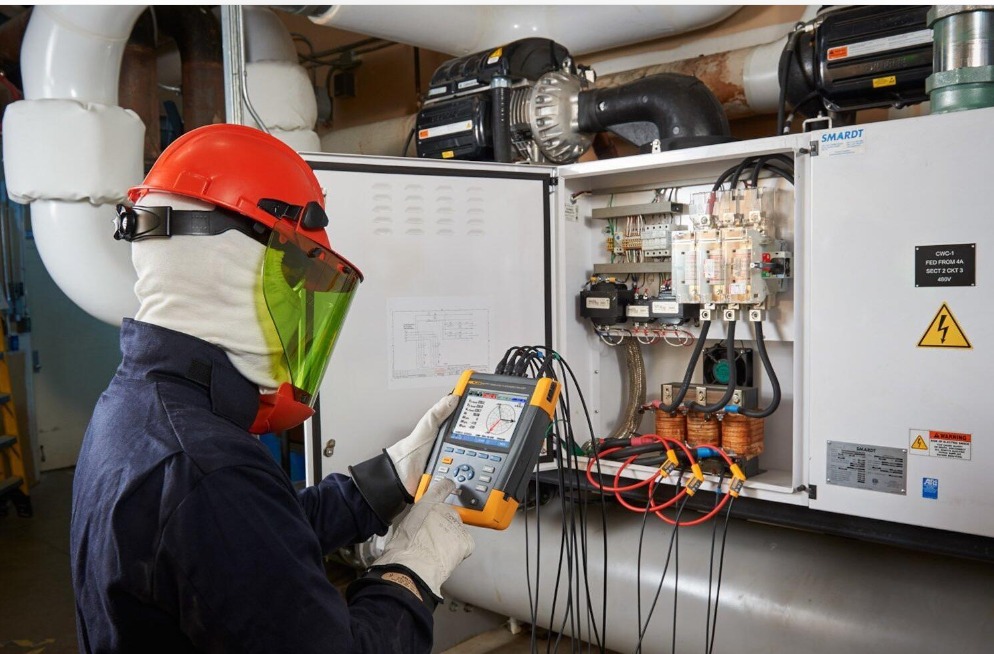
Depending on the scope, the audit team may use power analysers, clamp meters, temperature instruments, thermal imaging cameras, lux meters, flow-measurement devices and data loggers.
Ask the provider:
- Which measurements will be performed on-site?
- Will equipment be assessed under representative operating conditions?
- Are the instruments suitable for the intended measurements?
- Are calibration records available where required?
- How will readings be recorded, analysed and checked?
- What production, operating-hour and energy-consumption data must your team provide?
For example : A motor energy performance cannot be judged accurately from its nameplate alone. Actual loading, operating hours, control strategy and the driven system all influence its energy use.
Similarly, a thermal image can identify temperature anomalies, but the finding must be interpreted in context. Thermal imaging does not independently establish the cause of every hotspot or prove that a system is safe.
5. Review the Quality of the Energy Audit Report
A reliable industrial energy audit company in India should provide evidence-based findings, explain savings assumptions and prioritise recommendations according to technical feasibility and operating requirements.
A useful industrial energy audit report should clearly explain:
- The facility, systems and operating conditions covered.
- The audit objectives, methodology and limitations.
- Historical energy consumption and the baseline used.
- Important measurements and observations.
- Identified inefficiencies and their supporting evidence.
- Recommended energy conservation measures.
- Technical feasibility and operational considerations.
- Estimated investment and savings assumptions, where adequately supported.
- Indicative payback or other financial analysis were justified.
- Priorities, responsibilities and next steps for implementation.
Recommendations should distinguish measured findings from estimates and assumptions. Where data are incomplete, the report should explain the uncertainty and identify any additional measurements required.
6. Assess Technical Capability Beyond the Energy Bill
Energy use and electrical performance can be closely related, but an energy audit and an electrical safety audit are not interchangeable.
Depending on the site and agreed objectives, a comprehensive assessment may identify the need for additional specialist investigations.
These may include:
- Power quality and harmonic analysis.
- Power factor and reactive-power assessment.
- Transformer and LT panel testing.
- ACB and VCB testing.
- Thermographic inspection.
- Earthing and lightning protection assessment.
- Energy metering and monitoring improvements.
For instance, harmonic distortion may affect sensitive equipment and contribute to additional losses in some systems. However, the presence of harmonics does not automatically mean an active harmonic filter is the correct solution. Measurements, system configuration and engineering analysis should determine the appropriate corrective action. Likewise, power factor correction equipment, including APFC panels or static var generators, should be selected according to the site’s reactive-power requirements, load behaviour and technical constraints.
Choose a provider that can identify when specialist testing is appropriate and clearly distinguish audit recommendations from separately scoped engineering work.
7. Compare Deliverables, Costs and Expected Benefits
The lowest quotation is not necessarily the most economical choice. Equally, a higher quotation does not automatically indicate better technical quality energy audit importance for industries.
Compare proposals using the same scope and evaluation criteria.
Consider the following:
| Evaluation factor | What to verify |
| Audit scope | Equipment, utilities, processes and buildings included |
| Team competence | Qualifications and relevant industry experience |
| Measurement plan | Instruments, sampling periods and operating conditions |
| Reporting | Evidence, assumptions, recommendations and priorities |
| Financial analysis | Basis for cost estimates, savings and payback calculations |
| Implementation support | Whether assistance and follow-up are included or charged separately |
| Schedule | Site access, production coordination and report delivery |
| Commercial terms | Fees, exclusions, travel, taxes and payment milestones |
Request a clear explanation of any projected savings. Calculations should identify the baseline, assumptions, operating hours, energy prices and any relevant production or weather adjustments.
Estimated savings are not the same as verified savings. Actual results depend on implementation quality and operating conditions, and should be assessed against an appropriate baseline.
8. Look for Practical Recommendations and Follow-Up
An audit should not end with a list of observations. Its recommendations should help the plant team decide what to implement first.
A useful action plan may classify opportunities as:
- Operational improvements: scheduling changes, shutdown practices and control adjustments.
- Maintenance improvements: correction of identified leaks, poor settings or equipment conditions.
- Low-capital measures: appropriate controls, metering improvements and other justified changes.
- Capital projects: equipment upgrades, drive improvements, heat recovery or electrical-system modifications where technically suitable.
Each recommendation should identify the problem, proposed action, relevant constraints, expected benefit and method for assessing performance.
Ask whether the provider can explain findings to your maintenance team, support technical feasibility reviews or assist with follow-up measurement. Confirm which services are included in the quoted assignment.
9. Consider Industry Standards and Reporting Requirements
Selecting an industrial energy audit company in India becomes easier when you compare qualifications, audit scope, measurement quality and practical implementation support. ISO 50002-1:2025 describes general requirements and guidance for conducting energy audits across different organisations, systems and forms of energy use. It can provide a useful reference for evaluating audit planning, analysis and reporting. Where a project relates to BEE requirements, the Perform, Achieve and Trade (PAT) scheme, a statutory submission or a specific customer requirement, verifies the applicable provisions directly with the relevant authority or scheme documentation. Do not accept statements such as “fully compliant” without knowing which requirement applies, what evidence is required and whether the proposed scope satisfies it.
10. Use a Structured Vendor Selection Checklist
Before appointing an industrial energy audit company in India, review this checklist with your engineering and procurement teams.
- The auditor’s qualifications and applicable accreditation have been verified.
- Relevant industrial experience has been demonstrated.
- The audit boundary, equipment and deliverables are documented.
- The measurement plan suits the facility and its operating conditions.
- Site safety, access and production coordination have been addressed.
- The report will distinguish measured data from estimates.
- Recommendations will include technical reasoning and implementation priorities.
- Savings and payback assumptions will be explained.
- Exclusions, fees and follow-up services are clear.
- Any regulatory or scheme-specific requirements have been confirmed.
A written scope of work helps reduce misunderstandings and allows procurement teams to compare competing proposals fairly.

Why Consider Greenventum Powertech Solutions Pvt. Ltd.?
Along with the related industrial electrical and energy-management systems, Greenventum Powertech systems Pvt. Ltd. provides energy audit services. Assessment operations such energy-consumption evaluation, system inspections, measurement-based analysis, and efficiency opportunity identification are described in its published service material. Power quality solutions, thermography, electrical panel testing, and energy monitoring systems are examples of related products.
Request confirmation of the audit scope, recommended people, pertinent qualifications, measurement needs, deliverables, and commercial terms for your facility from the Greenventum team for a potential engagement.
Conclusion
Identifying your facility’s energy usage and the choices you need the audit to support is the first step in choosing the best industrial energy audit company in India. Verify qualifications, go over important work experience, select on the measuring strategy, assess report quality, and compare proposals side by side. For all, pick an audit partner who offers clear explanations of its conclusions and useful suggestions suited for your machinery, procedures, and operational environment. Industrial purchasers are invited to examine Greenventum Powertech Solutions Pvt. Ltd. energy audit services and talk about their facility’s needs.
Frequently Asked Questions
1. How do I choose an industrial energy audit company in India?
Check the auditor’s relevant qualifications, industry experience, measurement methodology, report quality, safety practices and ability to provide actionable recommendations. Compare quotations only after aligning the scope and deliverables.
2. Is BEE accreditation necessary for every industrial energy audit?
Not necessarily. The applicable requirement depends on the purpose of the audit, the facility’s regulatory status and any relevant scheme or contract. Verify current BEE requirements where accreditation or empanelment is required.
3. What does an industrial energy audit include?
Depending on the agreed scope, it may include energy-bill analysis, equipment inspections, field measurements, load profiling, utility-system assessments, identification of inefficiencies and recommendations supported by technical and financial analysis.
4. How much does an industrial energy audit cost in India?
The fee depends on facility size, process complexity, number of systems, measurement requirements, travel, audit duration and reporting depth. Request a site-specific quotation with a clearly defined scope rather than relying on a generic price.
5. How long does an industrial energy audit take?
The duration varies with the facility’s complexity, available data, operating schedule, measurement requirements and report scope. A walkthrough assessment generally requires less work than a detailed, measurement-intensive audit. Ask the provider for a proposed schedule.
6. Can an energy audit guarantee electricity savings?
No audit can responsibly guarantee a universal savings percentage without defined conditions and supporting evidence. An audit identifies and evaluates opportunities; actual savings depend on which measures are implemented, their performance and subsequent operating conditions.
7. What is the difference between an energy audit and an electrical safety audit?
An energy audit focuses on energy use, performance and efficiency opportunities. An electrical safety audit focuses on hazards and relevant safety controls. Some observations may overlap, but one service should not be assumed to replace the other.
8. What documents should we prepare before the audit?
Useful records may include electricity and fuel bills, tariff details, maximum-demand data, production records, equipment lists, operating schedules, maintenance records, existing meter data and previous audit reports. The provider should specify the documents required for the agreed scope.
9. Should we choose a local auditor or a company operating across India?
Choose based on technical competence, relevant sector experience, practical site support, travel and mobilisation arrangements, and the ability to meet the project schedule. Confirm service coverage for your particular location rather than assuming nationwide availability.
10. What should we do after receiving the audit report?
Review recommendations with engineering, operations, finance and procurement. Prioritise actions by technical feasibility, cost, risk and expected benefit. Assign responsibilities, document the implementation plan and measure results against a suitable baseline.
Request an Industrial Energy Audit Discussion
Looking to understand energy consumption and identify improvement opportunities at your facility?
Greenventum provides energy audit services and related industrial electrical solutions. Share your facility type, major energy-consuming equipment and audit objectives so the appropriate scope can be discussed.
Discuss your requirements:
- Website: https://greenventumpowertechsolutions.com
- Phone: +91 9650334786
- Email: info@greenventumpowertechsolutions.com
What Is An Energy Audit | Types, Process & Cost In India
October 21, 2026[…] also grouped as electrical, thermal, HVAC, lighting, compressed air, and whole-building audits. An industrial energy audit typically covers motors, pumps, compressors, boilers, furnaces and process heat, while a commercial […]