




Lightning Protection System
Using the Advanced Lightning Protection System to Protect What's Important Best
Industrial plants, commercial buildings, electrical equipment, data centers, telecom towers, hospitals, and manufacturing facilities can all experience major damage from lightning. By securely catching thunderstorms and transferring electrical energy into the earth without damaging your assets, a professionally built Lightning Protection System (LPS) protects your facilities. In India, Greenventum Powertech Solutions offers full lightning protection system design, supply, installation, testing, inspection, and yearly maintenance services. To provide the highest level of protection, safety, and dependability, our solutions respect to IS/IEC 62305, IS 3043, and NBC standards..
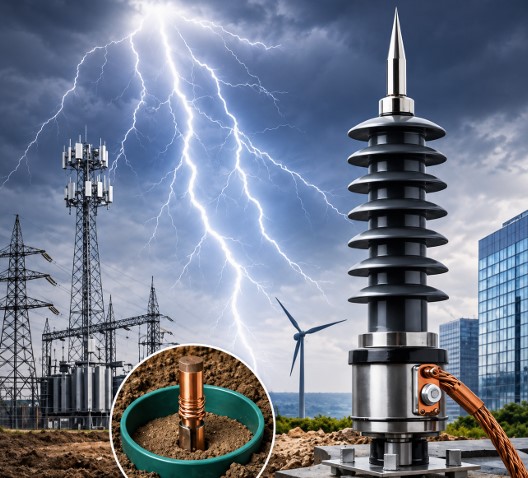
Buildings and electrical systems are protected from direct lightning strikes and excess voltages by a customized safety system called a Lightning Protection System (LPS). The device safely collects the impact and uses a low-resistance grounding network to transmit the electrical energy into the earth, keeping lightning current from passing through the structure An external LPS works in three stages. Air terminals intercept the strike at a chosen point, down conductors carry the current along a defined path, and the earthing network spreads it into the ground. Surge protection devices then protect internal wiring and equipment from the induced voltages that every nearby strike produces. When these parts are designed and bonded together, lightning energy is kept away from people and sensitive electronics.
A complete LPS protects:
- Human life
- Buildings
- Electrical panels
- Transformers
- Data Centres
- Solar Plants
- Communication Towers
- Industrial Machinery
- Sensitive Electronics
- Fire Protection Systems
Without proper lightning protection, organizations may experience:
Installing a professionally designed Lightning Protection System significantly reduces these risks while improving operational reliability.
Air Terminals (Lightning Rods)
Installed at the highest points of buildings to intercept lightning strikes.
- Captures lightning safely
- Protects rooftop equipment
- Prevents direct structural damage
Down Conductors
Heavy-duty conductors safely transfer lightning current from the air terminal to the earth.
- Low resistance path
- Corrosion resistant material
- High conductivity
- Long service life
Earthing System
An effective earthing system dissipates lightning current into the ground safely.
- Maintenance Free Earthing
- Copper Earthing
- GI Earthing
- Chemical Earthing
- Earth Resistance Testing
Surge Protection Devices (SPD)
Even if lightning does not directly strike a building, induced surges can damage electrical systems.
- PLC Systems
- Servers
- CCTV
- Fire Alarm Systems
- Automation Panels
- UPS
- Industrial Machines
- Communication Networks
Conventional LPS
Ideal for:
- Residential Buildings
- Warehouses
- Schools
- Small Commercial Buildings
Features: Franklin Rod, Copper Down Conductors, Standard Earthing.
Early Streamer Emission (ESE) System
Suitable for:
- High Rise Buildings
- Airports
- Hospitals
- Data Centres
- Industrial Plants
- Oil & Gas Facilities
Advantages: Larger protection radius, fewer air terminals required, better coverage, reduced installation cost.
Our systems are widely installed in:
Industry Expertise
Experienced engineers specializing in electrical safety, power quality, earthing, and lightning protection.
Standards Compliance
Solutions designed as per IS/IEC 62305, IS 3043, NBC Guidelines.
End-to-End Services
From design to maintenance, we handle the complete project lifecycle.
Customized Engineering
Every system is designed according to building height, risk category, soil resistivity, equipment sensitivity, and environmental conditions.
Quality Materials
We use premium-grade Copper Conductors, GI Conductors, Lightning Rods, Chemical Earthing, Surge Protection Devices, and Tested Connectors.