




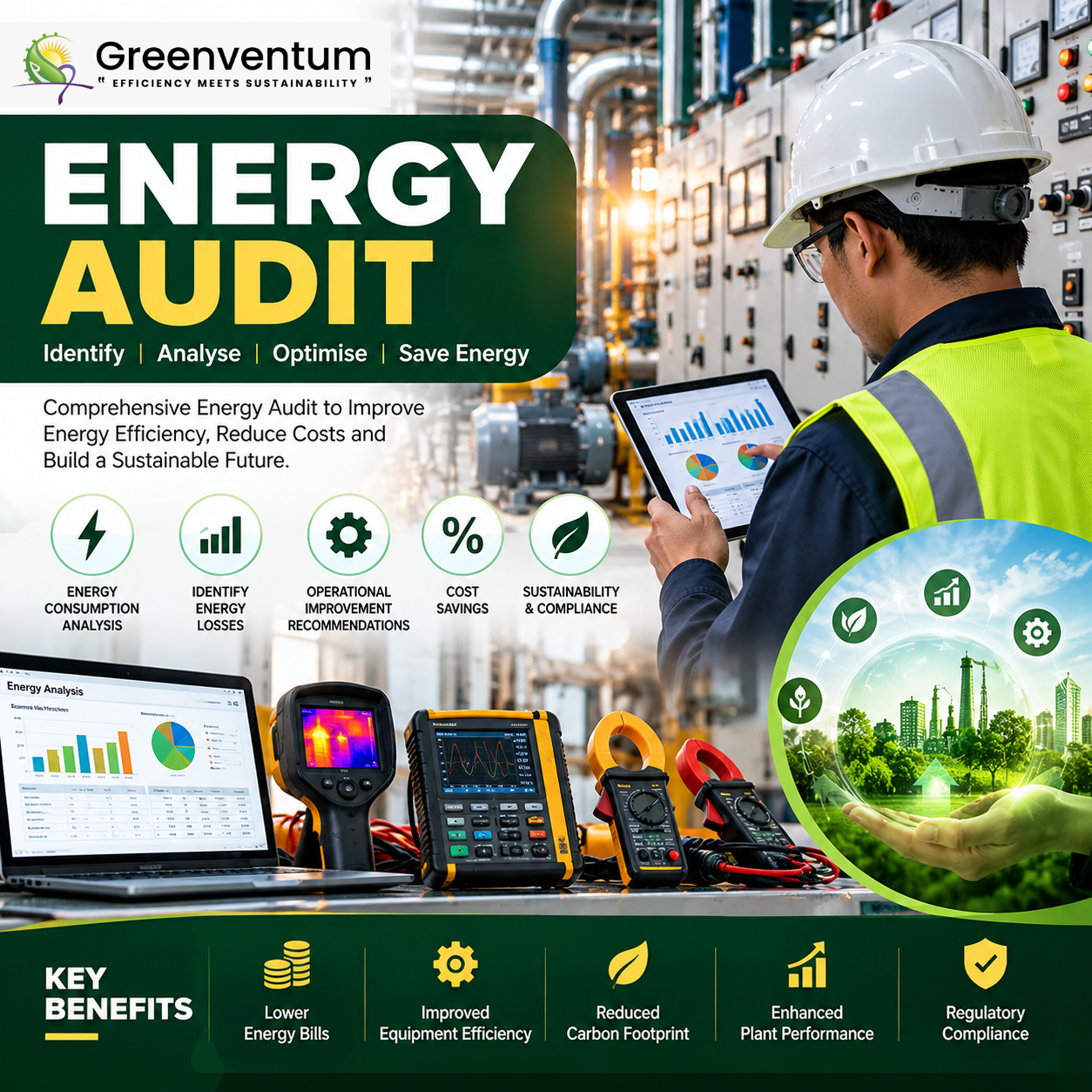
Energy Audit for Industrial Plants, Manufacturing facilities use electricity and other forms of energy for motors, compressors, pumps, HVAC systems, boilers, lighting, transformers, production equipment, and utility systems. When these systems operate inefficiently, industries may experience higher energy bills, unnecessary energy losses, poor equipment performance, and increased operating costs. An energy audit is a systematic assessment of how energy is consumed within an industrial facility. It helps identify energy losses, inefficient equipment, operational issues, and opportunities for improvement. By conducting a professional industries can better understand their energy consumption and develop practical measures to improve energy efficiency. Greenventum Powertech Solutions Pvt. Ltd. provides professional energy audit services for industrial plants to help organizations identify energy-saving opportunities and improve overall electrical and operational performance.
What Is an Energy Audit in an Industrial Plant?
An energy audit involves detailed inspection, measurement, monitoring, and analysis of energy-consuming systems within an industrial facility.
The objective is not simply to check the electricity bill. A professional industrial energy audit studies where energy is being consumed, where losses are occurring, whether equipment is operating efficiently, and what improvements can potentially reduce unnecessary consumption.
Depending on the facility and audit scope, engineers may evaluate systems such as:
- Transformers and electrical distribution systems
- LT panels and electrical panels
- Motors and pumps
- Air compressors
- HVAC and cooling systems
- Boilers and heating systems
- Lighting systems
- Production machinery
- Power factor and reactive power
- Harmonics and power quality
- DG sets and utility equipment
Measurements may be carried out using instruments such as power quality analyzers, clamp meters, thermal imaging cameras, lux meters, temperature meters, flow meters, and other testing equipment.

How Does an Energy Audit Improve Energy Efficiency?
1. Identifies Major Energy-Consuming Equipment
The first step toward improving energy efficiency is understanding where energy is actually being consumed. An energy audit helps create an energy consumption profile of the industrial plant. Engineers can identify major loads and determine which equipment or process contributes significantly to overall energy consumption. Once major energy-consuming areas are identified, management can prioritize improvement measures where they are likely to deliver the greatest benefit.
For example, motors, compressors, HVAC systems, pumps, furnaces, or production machinery may represent a significant portion of a plant’s electrical load.
2. Detects Energy Losses
Industrial facilities can experience energy losses that may remain unnoticed during normal operation. These may include overloaded or underloaded equipment, compressed-air leakage, inefficient motors, poor insulation, excessive lighting, unnecessary idle operation, electrical distribution losses, or incorrect equipment settings. A detailed energy audit helps identify these losses through inspection, measurements, operating data, and performance analysis. Reducing avoidable losses can directly improve the energy efficiency of industrial plants.
3. Evaluates Motor and Pump Efficiency
Motors are widely used across industrial facilities for pumps, fans, compressors, conveyors, and production equipment. An industrial audit can assess motor loading, operating hours, efficiency, and application requirements. For systems where load requirements vary significantly, engineers may evaluate whether technologies such as Variable Frequency Drives (VFDs) could improve operating efficiency. Similarly, pump systems can be checked for inappropriate sizing, throttling losses, inefficient operating points, and unnecessary continuous operation. Optimizing motor and pump systems can provide meaningful energy-saving opportunities in suitable industrial applications.
4. Improves Compressed Air System Efficiency
Compressed air is essential in many manufacturing facilities, but inefficient compressed-air systems can waste significant energy. During an audit, engineers may evaluate compressor loading, operating pressure, leakage, pressure drops, air demand, and operating schedules. Common improvement opportunities can include repairing air leaks, optimizing pressure settings, improving compressor sequencing, reducing inappropriate compressed-air usage, and maintaining filters and associated equipment.
A properly optimized compressed-air system can improve plant-level energy level efficiency while maintaining required production performance.
5. Analyzes Power Factor and Reactive Power
Poor power factor can increase reactive power demand and affect the efficient utilization of an electrical distribution system. During an energy audit, electrical parameters such as voltage, current, kW, kVA, kVAR, power factor, and demand can be analyzed. Where appropriate, corrective measures such as APFC panels, RTPFC panels, capacitor banks, or other power-factor correction solutions may be evaluated based on the plant’s actual electrical characteristics. The objective is to improve electrical system utilization while avoiding inappropriate compensation.
6. Identifies Power Quality Problems
Modern industrial plants use variable frequency drives, UPS systems, rectifiers, automation systems, and other nonlinear loads. These can contribute to power quality issues, including harmonic distortion.
A professional energy audit combined with power-quality measurements can help identify issues such as:
- Harmonics
- Voltage imbalance
- Current imbalance
- Poor power factor
- Voltage fluctuations
- Abnormal loading conditions
Depending on the measured results, suitable engineering solutions can then be considered. For example, harmonic-related problems may require further assessment before technologies such as an Active Harmonic Filter are selected.
7. Optimizes HVAC and Cooling Systems
HVAC and cooling systems can represent a substantial portion of energy consumption in commercial and industrial facilities. An energy audit can assess operating temperatures, equipment schedules, cooling requirements, filters, pumps, fans, chillers, and control settings. Opportunities may include optimizing temperature set points, improving preventive maintenance, correcting unnecessary operating hours, improving controls, or upgrading inefficient equipment where technically and financially justified. These measures can reduce unnecessary consumption without compromising required environmental or process conditions.
8. Improves Lighting Efficiency
Lighting may appear to be a smaller load compared with production equipment, but inefficient lighting across a large industrial facility can still create avoidable energy consumption. During an energy audit, engineers can evaluate installed lighting load, operating hours, illumination levels, and actual requirements. Possible measures may include LED upgrades, occupancy sensors, daylight utilization, zoning, timer-based controls, or optimizing unnecessary lighting. The objective should be to maintain appropriate illumination while reducing unnecessary energy use.
9. Creates an Energy-Saving Action Plan
One of the most valuable outputs of an energy audit is an actionable improvement plan. Instead of making equipment changes without sufficient data, industries can prioritize opportunities based on technical feasibility, estimated energy savings, investment requirements, operational impact, and expected payback period. Recommendations can generally be categorized into no-cost, low-cost, and investment-based energy conservation measures. This helps management make better-informed decisions and allocate resources toward improvements that provide measurable value.
10. Supports Long-Term Energy Management
An energy audit should not be viewed only as a one-time inspection.
The findings can provide a baseline for ongoing energy management. Industries can track important indicators such as electricity consumption, maximum demand, power factor, specific energy consumption, equipment loading, and energy consumption per unit of production. Periodic monitoring helps organizations determine whether implemented energy-saving measures are producing the expected results and whether new inefficiencies have developed.

Benefits of an Energy Audit for Industrial Plants
A professionally conducted energy audit can help industrial facilities achieve several operational and financial benefits, including:
- Identification of energy-saving opportunities
- Reduction of avoidable energy losses
- Improved energy efficiency
- Better equipment utilization
- Improved understanding of electrical performance
- Identification of power-quality issues
- Better energy monitoring and management
- Reduced operating costs where recommended measures are successfully implemented
- Support for sustainability and energy-management objectives
- Data-driven planning for future efficiency investments
Why Choose Greenventum Powertech Solutions?
Greenventum Powertech Solutions Pvt. Ltd. provides professional energy audit services and electrical engineering solutions for industrial and commercial facilities. Our approach focuses on on-site measurements, technical analysis, identification of energy conservation opportunities, and practical recommendations based on actual operating conditions. Along with energy audits, Greenventum provides services including Electrical Safety Audit, Fire Safety Audit, Power Quality Audit, Thermography, Arc Flash Study, Water Audit, ESG & Sustainability services, Data Centre Testing & Commissioning, MEP Testing, and other electrical testing and engineering services. We also provide solutions such as Active Harmonic Filters, Static VAR Generators, Servo Stabilizers, APFC/RTPFC Panels, LT Panels, Energy Management Systems, Lightning Protection, and earthing solutions.
Conclusion
Improving industrial energy efficiency begins with understanding exactly how and where energy is being consumed. A professional energy audit provides the measurements, analysis, and technical insights required to identify inefficient systems and potential energy-saving opportunities. From motors and compressors to HVAC systems, transformers, lighting, power factor, and power quality, an industrial energy audit can reveal opportunities that may otherwise remain unnoticed. For industries looking to improve energy efficiency, optimize electrical systems, and develop a structured energy-saving strategy, Greenventum Powertech Solutions Pvt. Ltd. provides professional energy audit services in India backed by engineering-focused analysis and practical recommendations.
How To Choose An Industrial Energy Audit Company In India
October 15, 2026[…] How Does an Energy Audit Improve Energy […]