




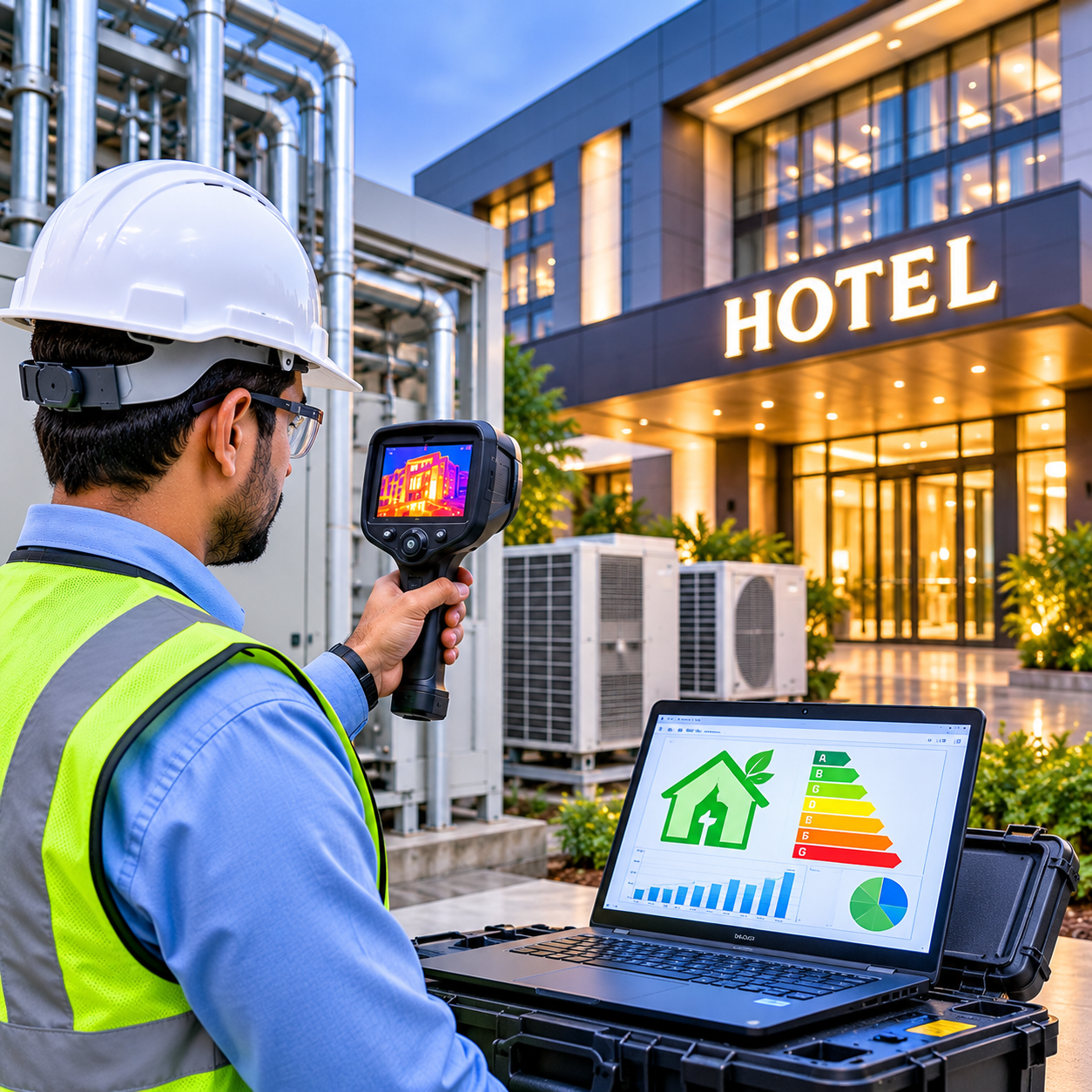
The air conditioning in the vacant room continues to run till the evening even when a visitor checks out at ten in the morning. The waste quickly grows when you factor in hundreds of rooms, kitchens, laundry facilities, and lobby areas. One of the largest operational costs for any property is energy, and the most accurate approach to identify areas where money is being lost in hotel buildings is through an energy audit. What a hotel energy audit entails, where the savings are hidden, and how to respond to the findings are all explained in this book.
What Is an Energy Audit for Hotel Properties?
Regarding hotel buildings, an energy audit is an in-depth review of your building’s water, gas, and electricity usage. Auditors monitor actual use, examine utility bills, examine equipment, and assess your performance in relation to other hotels of a similar nature. Each efficiency opportunity is listed in the final report along with its cost, anticipated savings, and payback period.
Because they are open around-the-clock and contain a variety of areas, including guest rooms, restaurants, spas, pools, conference rooms, and laundry, hotels are more difficult to maintain than offices. Each is treated differently in a energy audit for hotel due to their distinct energy profiles.
Why Every Property Needs a Hotel Energy Audit
Energy typically makes up 3 to 6 percent of a hotel’s revenue, and many properties waste 20 to 30 percent of what they use. Rising tariffs, guest expectations for sustainability, and stricter regulations make it harder to ignore. A hotel energy audit helps you:
- Lower utility bills and improve profit margins
- Reduce carbon emissions for ESG and green certifications
- Extend equipment life through better maintenance
- Improve guest comfort with balanced temperature and lighting
7 Ways an Energy Audit for Hotel Operations Cuts Costs
1. Optimizing HVAC Systems
Heating and cooling usually consume 40 to 60 percent of a hotel’s energy. Auditors check chillers, boilers, air handling units, and duct leakage. Common problems include oversized equipment, poor maintenance, and systems cooling unoccupied rooms.
2. Upgrading Lighting
Lighting runs long hours in lobbies, corridors, and parking areas. Replacing old fixtures with LEDs and adding occupancy and daylight sensors can cut lighting energy by 50 to 70 percent.
3. Installing Smart Guest Room Controls
Room energy management systems detect when a guest leaves and automatically adjust temperature and lighting. This is one of the fastest ways to reduce hotel energy costs without affecting comfort.
4. Improving Hot Water Efficiency
Showers, laundries, and kitchens use enormous amounts of heated water. An audit looks at boiler efficiency, pipe insulation, and heat recovery. Low-flow fixtures and heat pumps often pay back quickly.
5. Reviewing Kitchen and Laundry Equipment
Commercial kitchens and laundries are energy-intensive. Auditors measure equipment efficiency, idle running times, and ventilation hood controls. Variable-speed exhaust fans and efficient washers can deliver strong hotel energy savings.
6. Fixing the Building Envelope
Leaky windows, poor insulation, and gaps around doors let conditioned air escape. Sealing and insulation improve comfort and reduce the load on HVAC systems.
7. Tuning the Building Management System
A building management system is only as good as its settings. Auditors review schedules, setpoints, and sensors, since misconfigured controls are a major source of hidden waste.
Types of Energy Audits for Hotels
| Audit Level | Scope | Best For |
|---|---|---|
| Level 1 (Walk-through) | Visual inspection and bill review | Quick, low-cost ideas |
| Level 2 (Standard) | Detailed measurements and savings calculations | Most hotels planning upgrades |
| Level 3 (Investment-grade) | Advanced modeling and financial analysis | Major retrofits and financing |
Most properties choose Level 2, which balances cost with actionable detail.
The Energy Audit for Hotel Process, Step by Step
- Collect data. Gather 12 to 24 months of utility bills, equipment lists, and occupancy records.
- Benchmark performance. Compare energy use per occupied room or per square meter against similar hotels.
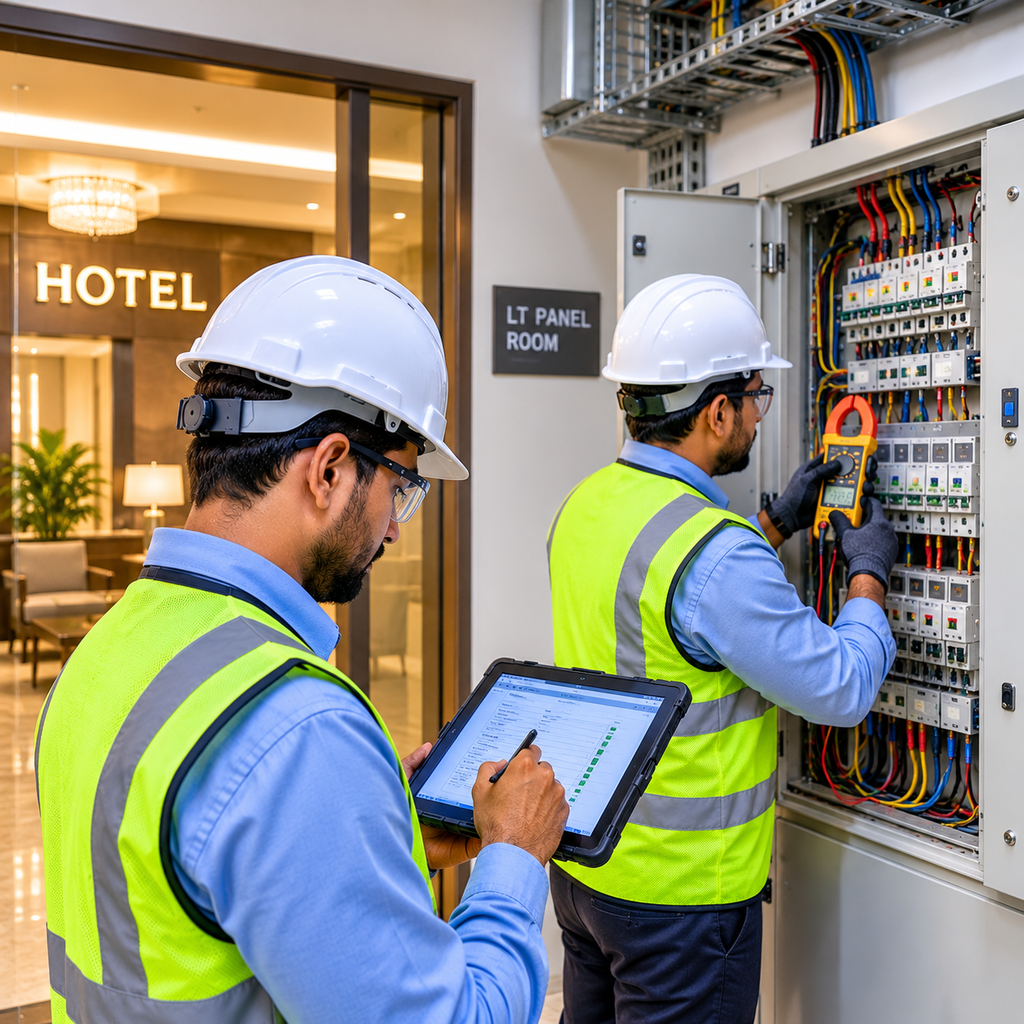
- Survey the site. Auditors inspect equipment, take measurements, and interview engineering staff.
- Monitor loads. Data loggers capture consumption patterns across seasons and occupancy levels.
- Analyze and model. The team calculates savings for each improvement.
- Receive the report. You get prioritized recommendations with costs and payback periods.
Quick Wins You Can Start Right Away
Not every improvement needs a big budget. After your audit, start with these:
- Set back room temperatures automatically when rooms are vacant
- Switch off lighting in unused banquet halls and corridors
- Insulate hot water pipes and fix leaks
- Clean filters and condenser coils regularly
- Adjust pool heating and pump schedules
These measures alone can help reduce hotel energy costs by 5 to 15 percent with minimal investment.
Long-Term Upgrades With Strong ROI
Audit data also supports larger projects: high-efficiency chillers, rooftop solar, heat pump water heaters, and energy monitoring software. Many pay back in two to five years while raising property value and appealing to eco-conscious travelers.
How to Choose the Right Auditor
Look for certified professionals, such as a Certified Energy Manager (CEM), with proven hospitality experience. Ask for sample reports and client references. A good provider of an energy audit for hotel projects will also explain how savings are measured and help you plan implementation, not just hand over a document.
Conclusion
As every hotel, energy waste is a hidden expense, but it’s also one of the simplest to address. You may identify problems, prioritize improvements, and verify your return on investment with the help of an energy audit for hotel buildings. For long-term hotel energy savings, start with a professional hotel energy audit, take action on the immediate gains, and make long-term improvementa plans.
Ready to cut your hotel’s energy bills by up to 30%? Our certified auditors will identify hidden waste, calculate your payback period, and give you a clear action plan.
Comments are closed